
Taxonomy, Structured Content, and AI Readiness
From manual to automated — making 4,000+ pages taggable and Dell's content AI-ready.
Problem
Content at Dell was largely unstructured and untagged. Without taxonomy, content couldn't be made machine-readable - blocking personalization, smart content, and AI-powered experiences. The team faced an impossible deadline using a manual, error-prone workflow.
Outcome
4,000+ pages tagged in under a month. Short and mid-term solutions shipped. Long-term AI readiness model presented and aligned at SteerCo. Dell Innovation Award - recognized for innovation by the Lead Taxonomist.
Role
Senior Product Designer, owning the 3-phase strategy, workflow design, integration UX, and SteerCo presentation.
Timeline
1 month
Dell's content wasn't tagged. That left it unreliably structured, discoverable, or reusable for AI-powered experiences - and impossible to manage at scale. The immediate task: tag 4,000+ pages in one month using a process that was entirely manual. I reframed the brief, designed a 3-phase strategy, and shipped the solutions that made it possible.
taxonomy-full-tl-dr
Overview
TL;DR
Problem
• Dell's content was untagged - not machine-readable, not AI-ready • Tagging 4,000+ pages in one month was impossible with the existing manual process • The underlying issue: leadership wanted AI experiences without the content foundation to support them
What I designed
• A 3-phase strategy: short-term to unblock the team, mid-term to automate, long-term to align leadership on what AI readiness actually requires • Short-term: a SKOS-based workflow reducing operator input from 15+ manual fields to 2–3, with 90% auto-populated • Mid-term: direct integration between Pool Party and Content Studio with automatic taxonomy updates • Long-term: an AI readiness model benchmarked against Amazon and Microsoft, presented at SteerCo
Impact
• 4,000+ pages tagged in under a month • Before: 15+ manual fields per page. After: 90% auto-populated, 2-3 fields remaining, 3 minutes per page • Short and mid-term solutions shipped • Dell Innovation Award - recognized for reducing user error and incomplete content metadata
taxonomy-cardsx3
Numbers
Volume
4,000+ pages
Tagged in under one month
Manual effort
15+ fields → 2–3
Manual fields per page, with 90% of taxonomy data auto-populated
Speed
3 min per page
Time to tag one page with the new workflow
taxonomy-full-problem
Problem
A manual workflow that could not scale
The content team had a mandate: tag 4,000+ landing pages in one month. The process to do it was entirely manual.
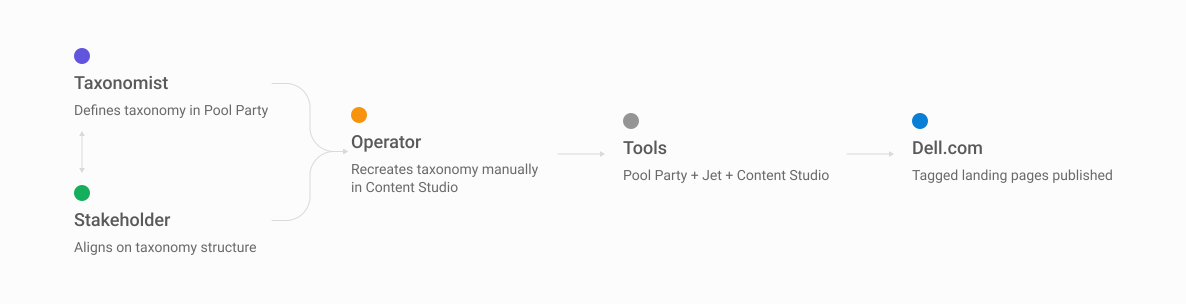
A Taxonomist defined the taxonomy structure in Pool Party. A Stakeholder aligned on it. An Operator then had to manually recreate that structure in Content Studio - copy-pasting data across tools, field by field, with no direct connection between the two systems. Every change to the taxonomy meant repeating the process from scratch.
At that volume and timeline, manual wasn't an option. It was also the wrong problem to solve - tagging the pages was urgent, but the root issue was deeper: untagged content at Dell meant no structured content, no personalization, and no foundation for AI-powered experiences.
taxonomy-full-stategy
Strategy
A 3-phase plan from urgent tagging to AI readiness
Rather than solving only the immediate task, I proposed a 3-phase approach:
Short-term - design a workflow that lets the team tag 4,000+ pages within the deadline
Mid-term - integrate Pool Party directly into Content Studio, replacing the manual process
Long-term - show leadership what the path from taxonomy to AI-ready experiences actually requires
The team worked short and mid-term in parallel. Leadership invited me to present the long-term model at SteerCo.
taxonomy-full-short-term
Short-term
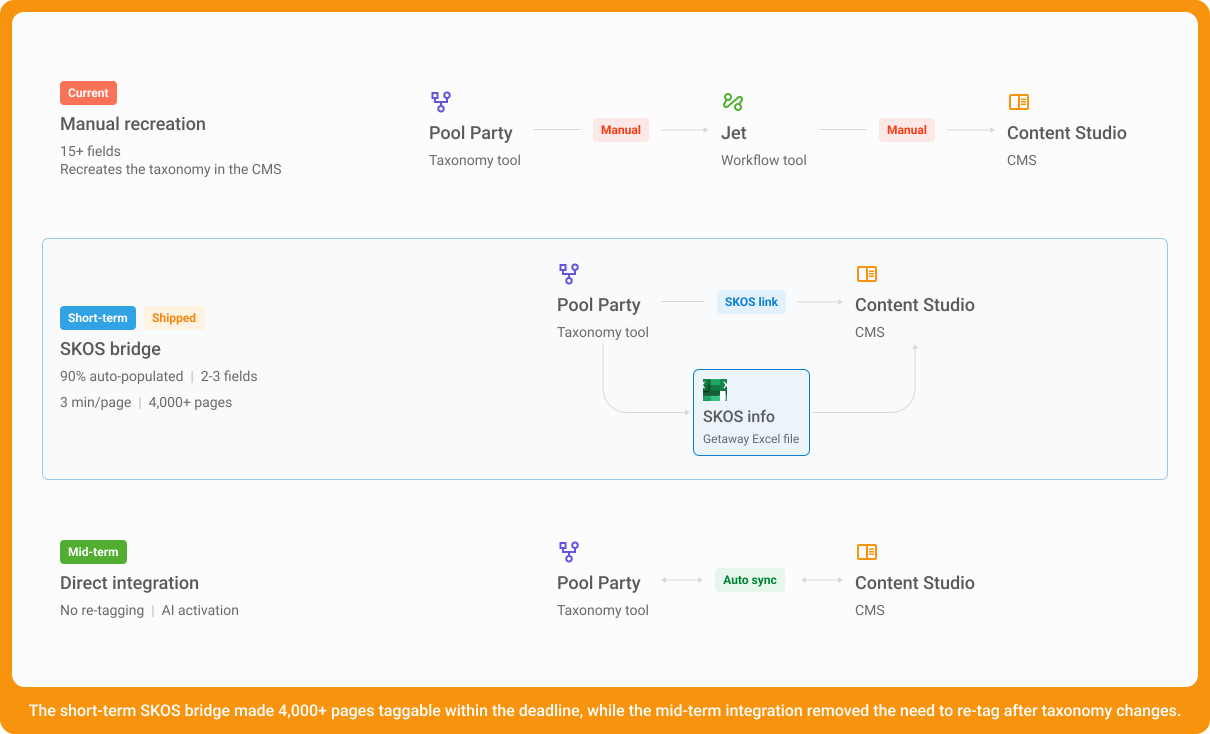
Replacing manual taxonomy entry with a SKOS bridge
The original plan was a direct API integration between Pool Party and Content Studio. Technical constraints ruled that out in the time available.
I'd solved a similar constraint before - two disconnected tools bridged through a gateway pattern. I went looking for an equivalent in Pool Party's documentation and found it: Pool Party could generate a SKOS link, a structured export carrying approximately 90% of the taxonomy data the operator needed.
Before
15+ manual fields per page, entered by hand
Full taxonomy recreation in Content Studio for every page
Repeated from scratch after every taxonomy change
After
90% of taxonomy data auto-populated via SKOS link
Operator fills 2–3 remaining fields
3 minutes per page
Key constraints and tradeoffs
SKOS carries ~90% of the data - the operator fills the remaining 2–3 fields manually
If the taxonomy structure changes, a new SKOS link must be generated and re-applied
Pool Party and Content Studio remain indirectly connected - the link is a bridge, not an integration
Accepted as a short-term tradeoff: fast to implement, sufficient for the deadline, explicit limitation documented for mid-term
taxonomy-full-mid-term
Mid-term
Moving from workaround to automatic taxonomy sync
The mid-term solution replaced the workaround with direct integration.
When an operator creates a page in Content Studio, the system identifies which taxonomy structure applies automatically. If more than one match exists, the operator selects the correct one. When taxonomy changes in Pool Party, it applies in Content Studio automatically - no new link, no re-tagging required.
The operator's role shifts from data entry to decision-making. The manual dependency disappears.
taxonomy-full-long-term
Long-term
Showing leadership what AI-ready content actually requires
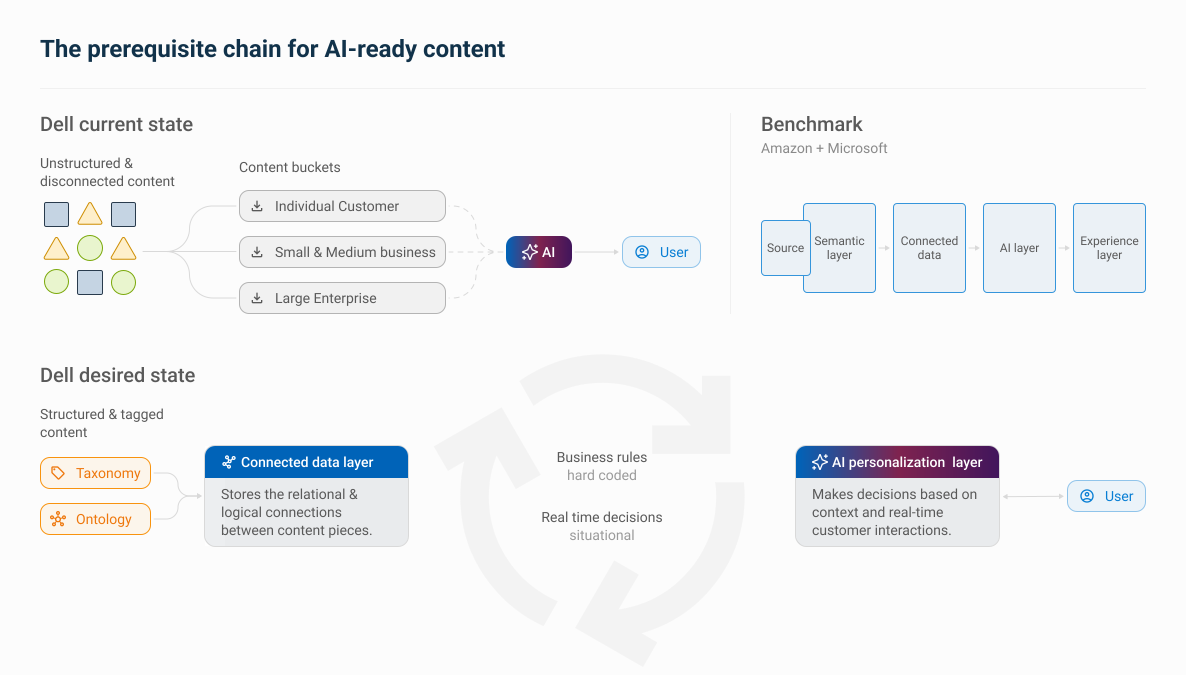
I reverse-engineered how Amazon and Microsoft built their structured content to AI pipelines - taxonomy and ontology as the semantic layer, knowledge graphs as the data layer, AI personalization on top. I mapped Dell's current state against that model and presented the gaps at SteerCo.
The goal: make the prerequisite chain visible. You can't have AI in your experiences without tagged content. That connection wasn't obvious to leadership until it was shown in comparison with companies that had already built it.
taxonomy-full-outcome
Outcomes
What shipped, what changed, and what proved the work
4,000+ pages tagged in under one month
Before: 15+ manual fields per page. After: 90% auto-populated, 2-3 fields remaining, 3 minutes per page
Short and mid-term solutions shipped - UX, UI, and workflows
Long-term AI readiness model aligned at SteerCo
Dell Innovation Award
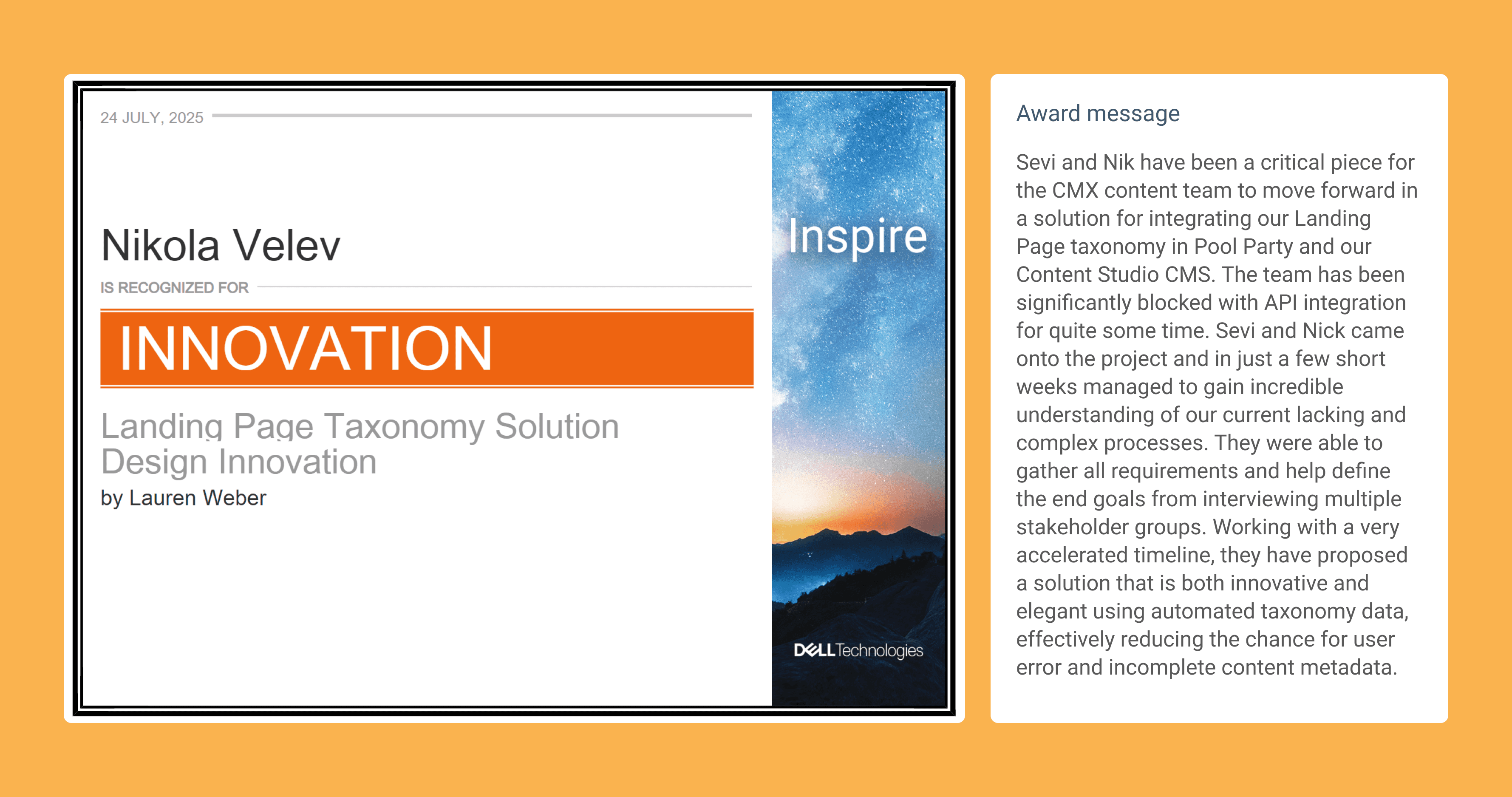
Recognized for an elegant solution that reduced user error and incomplete content metadata
Case study
Highlights